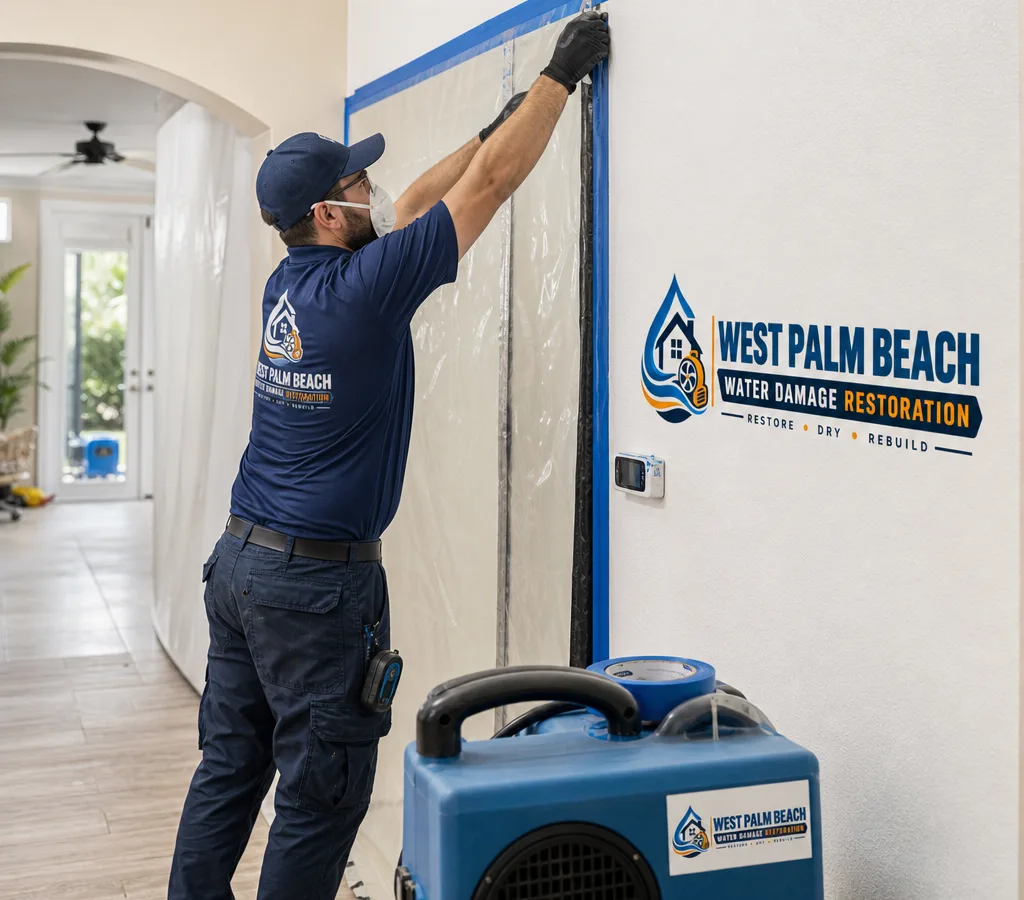
Containment to stop spread
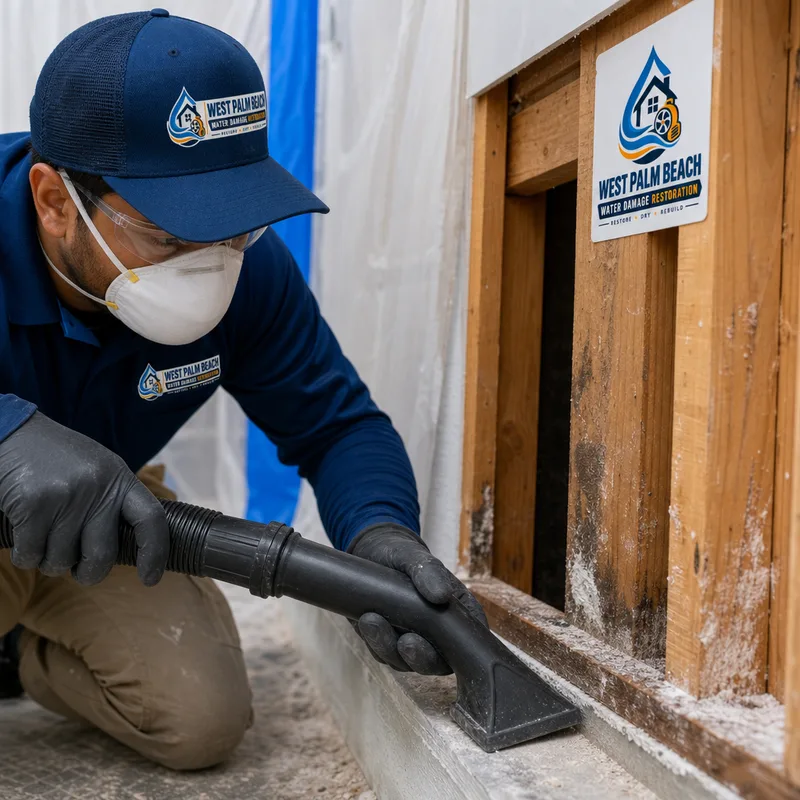
We isolate the work area with plastic sheeting and controlled access so spores and dust stay in the zone being treated, not throughout the property.
Serving West Palm Beach, Florida & surrounding areas
Mold Removal Service · West Palm Beach
If you smell mustiness, see staining, or had a recent leak, we can inspect, contain, and remove mold with a clear plan that protects your home or business and gets you back to normal quickly.
Immediate response
Mold growth is usually a moisture problem first. In West Palm Beach, that often means humidity, HVAC condensation, wind-driven rain, or a plumbing leak that stayed hidden long enough to wet drywall, baseboards, or cabinets. If you are searching for mold removal in West Palm Beach, you are likely trying to solve two things at once: remove what is already growing and stop it from returning.
Our team at West Palm Beach Water Damage Restoration handles mold removal with containment, filtration, and detailed cleaning, followed by verification steps so you know what was done and why. If the mold followed a leak or overflow, it also helps to address the moisture source right away; many customers start with water damage restoration to dry the structure, then move into mold cleanup once conditions are stable.
You will get straightforward communication: what areas are affected, what materials can be cleaned versus removed, what safety controls are needed, and what to expect for time and disruption.
Scope and warning signs
Mold can grow on many building materials, but porous materials that stay damp are the common trouble spots. In South Florida homes and condos, we frequently see growth behind baseboards, on the back side of drywall, under sinks, around window frames, and near air handlers or supply boots where condensation can form.
West Palm Beach has a mix of single-family homes and multi-unit buildings. In condos and townhomes, shared walls and limited access can make it harder to trace moisture, so containment and careful demo boundaries matter. In older neighborhoods with more original construction, small plumbing leaks can wet framing or plaster/drywall assemblies for a long time before anyone notices.
If you are in areas such as Downtown West Palm Beach, Northwood, or around Palm Beach Lakes, the work plan may change based on access, occupancy rules, and how the building is laid out. The goal stays the same: remove contaminated materials safely, clean remaining surfaces correctly, and leave the space dry and stable.
We isolate the work area with plastic sheeting and controlled access so spores and dust stay in the zone being treated, not throughout the property.
Air scrubbers with HEPA filtration help capture airborne particulates during removal, cleaning, and drying, especially when materials are being cut out.
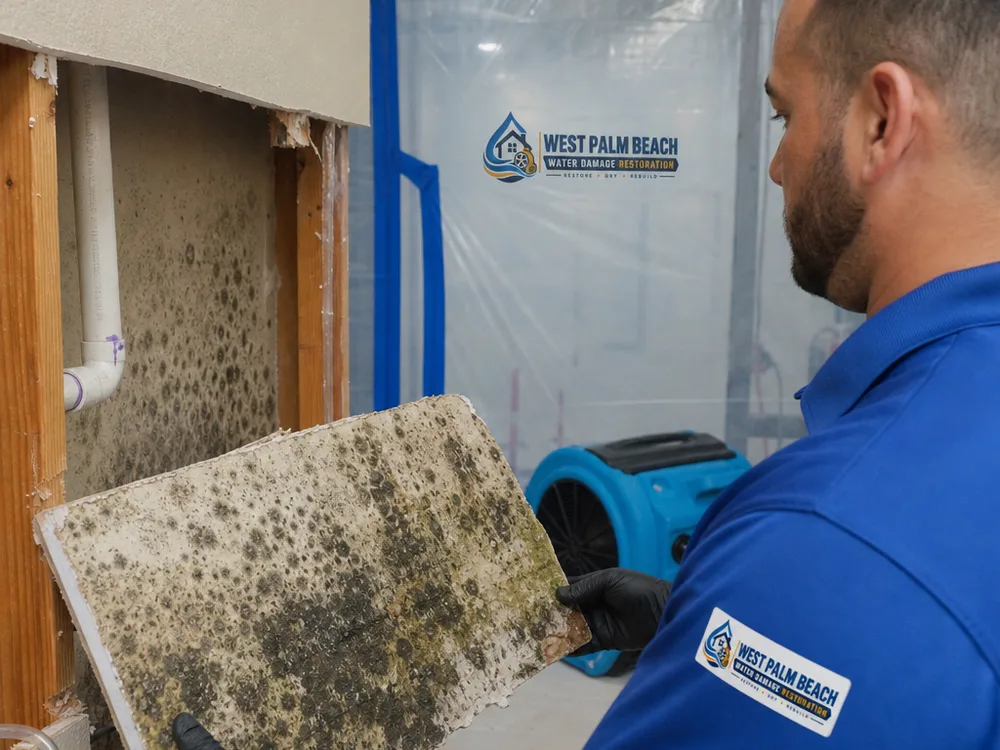
Drywall, insulation, and other porous materials that are colonized typically need to be removed to physically eliminate growth.
We HEPA vacuum and clean framing and surfaces that remain, then apply appropriate antimicrobial products based on the material and conditions.
Mold returns when moisture remains. We document moisture concerns and outline what needs to be corrected, including leaks, condensation, ventilation, or drying.
You get a written scope that defines boundaries, protection steps, and what is included so the project stays predictable.
Contained cleanup
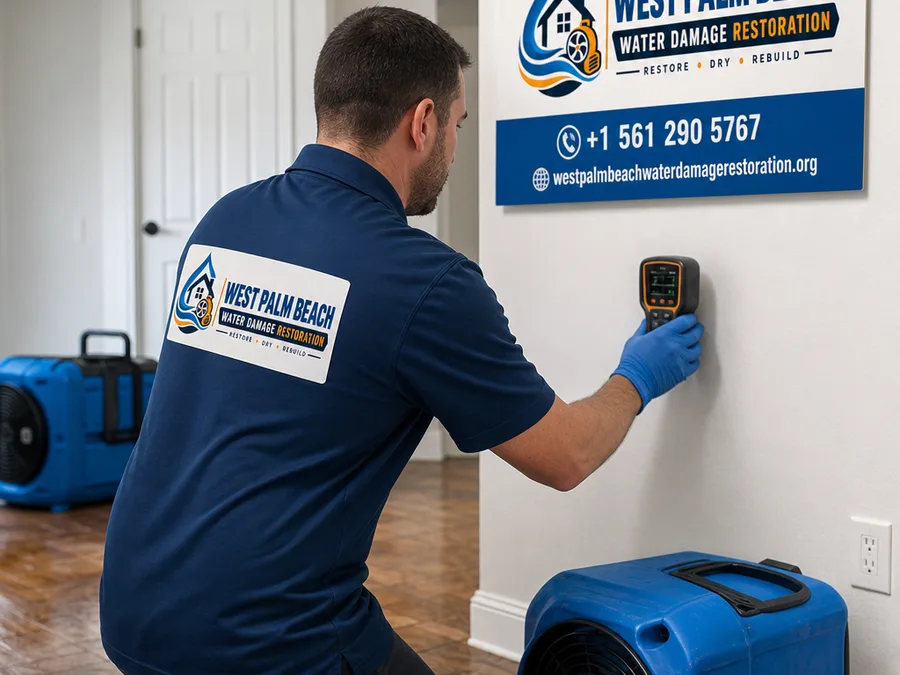
We look for visible growth and likely moisture sources, check humidity and moisture levels, and discuss any recent leaks, HVAC issues, or musty odors you have noticed.
We define the affected areas, set containment needs, and explain which materials are likely to be removed versus cleaned. You will know what rooms are impacted and how we protect the rest of the home.
We install barriers and run HEPA filtration as needed. This is the step that keeps a small problem from becoming a whole-house dust event.
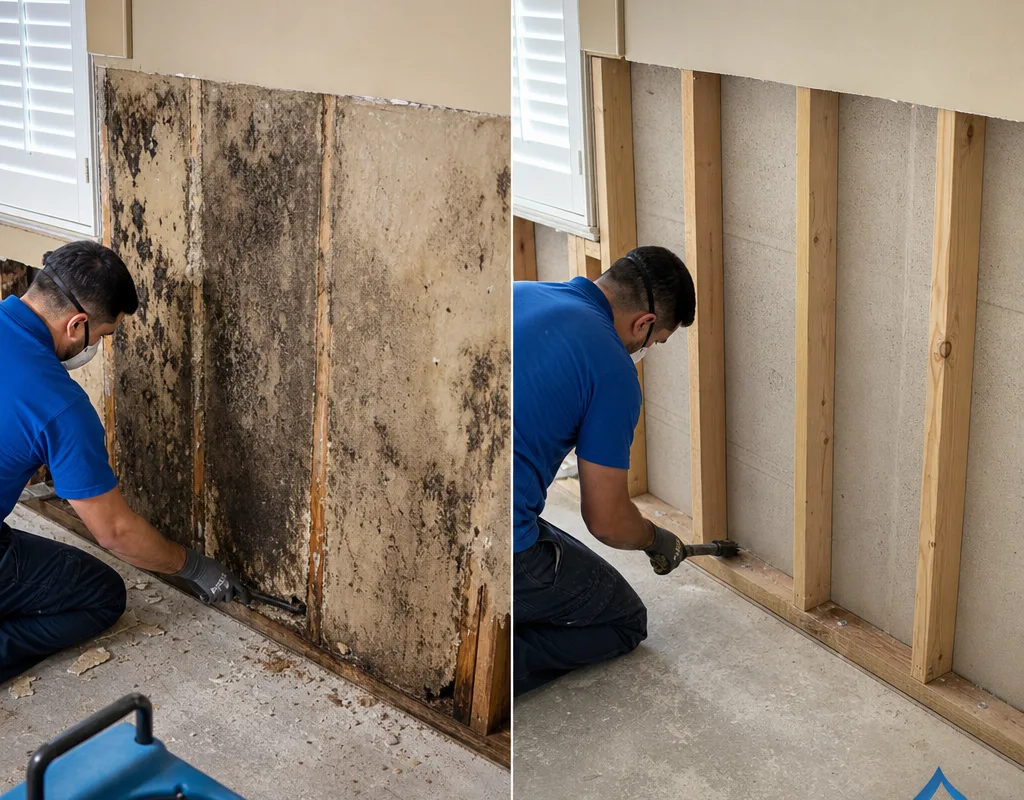
Contaminated porous materials are removed and bagged out. Remaining structural surfaces are HEPA vacuumed and cleaned, then treated as appropriate for the substrate.
We confirm the area is dry and the visible contamination has been addressed, then walk you through next steps such as rebuild planning, HVAC considerations, and how to prevent recurrence.
Planning the work
Mold removal in West Palm Beach typically ranges from about $750 to $3,500 for smaller, contained areas, while larger or multi-room projects with significant material removal can run $4,000 to $12,000+. A small under-sink cleanup with limited drywall removal often sits at the low end, while an AC-closet, attic, or widespread wall system can push costs higher.
Price depends on the size of the affected area, how much porous material must be removed, access such as tight closets or high ceilings, containment level, and whether moisture correction or drying is still needed. The exact cost is confirmed after an on-site inspection and a written scope.
“
We had a musty smell that kept coming back. The crew showed us where the moisture was coming from, sealed the room properly, and the cleanup was much more organized than I expected. The air felt better right after, and they explained what to fix so it wouldn't return.
“Our condo management had rules about work hours and protecting the hallway. They coordinated it, kept the area clean, and the scope stayed exactly what we agreed to.”
Clear answers
Start time depends on current demand and the scope, but many projects can begin quickly after an initial inspection, especially when there is active moisture or strong odor. If a leak is ongoing or materials are still wet, the priority is stabilizing conditions before or alongside removal so the cleanup holds.
You usually do not need testing to begin mold removal when there is visible growth and a clear moisture source. Testing can be helpful when the problem is hidden, when you need documentation for a third party, or when symptoms persist without obvious staining. If you already have a report, we can align the scope to the findings.
Drywall and insulation that are significantly affected are typically removed because they are porous and hard to fully decontaminate once colonized. Framing and other semi-porous or non-porous surfaces can often be cleaned with HEPA vacuuming and appropriate antimicrobial steps, then dried and verified.
Many occupied homes can remain livable when the affected area is properly contained and access is controlled, but it depends on where the mold is and who lives there. If multiple rooms are involved or occupants have respiratory concerns, it may be more comfortable to limit time in the work zone or stay elsewhere during disruptive phases.
Mold prevention comes down to moisture control: fixing leaks, managing indoor humidity, and addressing condensation points around HVAC and windows. In West Palm Beach, running the AC correctly, ensuring good drainage and ventilation, and drying wet materials promptly are the practical steps that discourage regrowth.
Yes. Multi-unit properties often require documentation, controlled hours, and protection of common areas such as hallways and elevators. We can coordinate the work plan so containment, debris removal, and equipment placement fit building rules while still meeting remediation best practices.
Start with a clear scope
Describe what you are seeing or smelling and when it started. We will schedule an on-site assessment, explain the containment and cleanup steps, and provide a written scope that fits your West Palm Beach property.